Making sense of the credit world feels like a lost cause: a premium card barely gives you a £2k limit, while a random supermarket card goes straight to £12k. Your main bank seems reluctant to give you credit, while those who don’t know you are happy to pre approve you.
There are just way too many factors involved: market conditions, credit score, your internal score with the bank, and of course – profitability. Credit card providers want profitable customers, not necessarily ones with squeaky clean credit scores who barely spend.
You may find you’re pre approved for a Barclaycard today, and rejected next month. That’s not you, it really is them.
However, most banks now offer an eligibility checker so you can get a pretty good idea before you apply.
What about credit limits?
Banks have been getting better on this, but not all.
It used to be a complete shot in the dark: you apply, you’re approved, and you discover your limit upon approval. Most big banks now give you an indication when you check your eligibility: Barclaycard, Lloyds, Santander give you a fairly accurate estimate of how much they’ll give you access to.
HSBC, Amex, and cards like Tesco and M&S? Not so much.
However, even if you get a low limit you have a few options. So here’s what I did.
From £1k to £5k
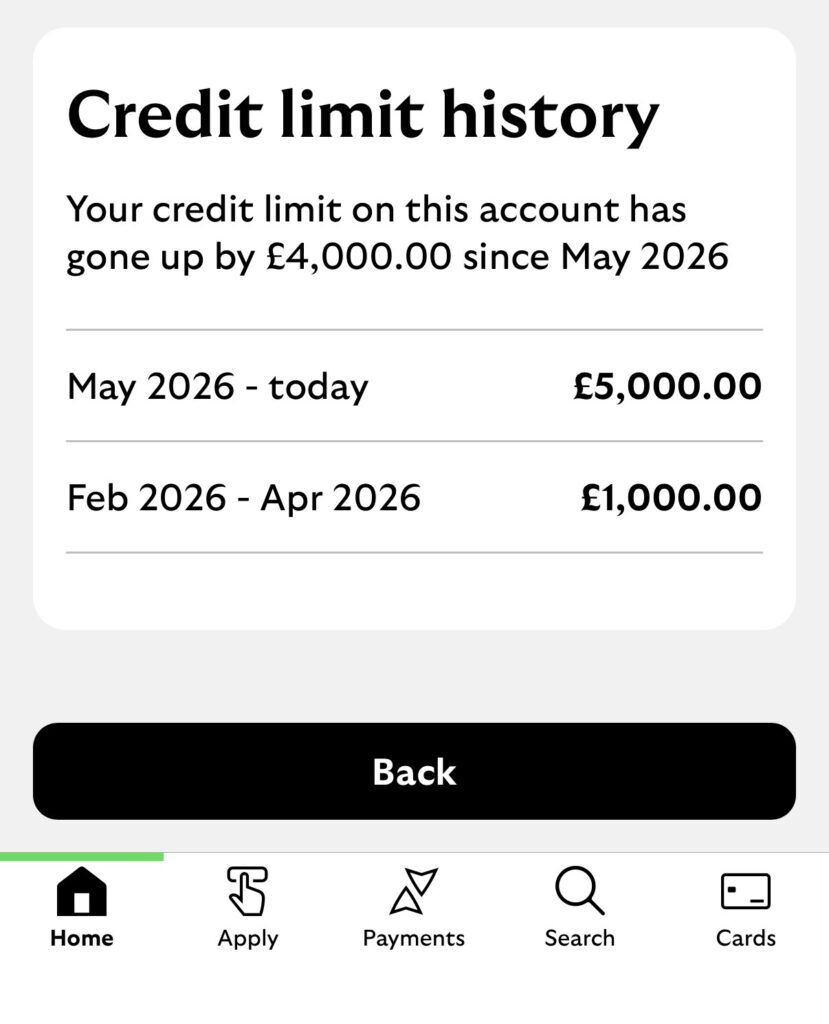
When I applied for the Lloyds Ultra card I was pre approved for just a £1k limit.
That was disappointing, because it meant I’d have to pay at least once or twice mid month just to keep the balance low. As I’d rather not to go over 20% or 25% of your total limit, it meant I’d pay in £100-£150 a few times a month.
A mild inconvenience, but Lloyds let’s you ask for an increase within 90 days of opening the account.
So I waited till day 91 (I like to be safe like that) and asked for £5k. It was granted on the spot, and the new limit showed up straight away.
£5k was a good first step, but I wanted £10k for my main travel card.
From £5k to £10k
Going from £1k to £10k seemed like a big step so I wanted to get some clear indication first.
Credit limits can feel like a game: ask for too little and you’re “leaving money on the table”, ask for too much and you might get rejected altogether.
So here’s what I did: I checked my eligibility for a second card.
Lloyds pre approved me for another £5600 card, which meant my total limit would be £10,600.
Does that mean they’re comfortable with £10k on one single card? Not necessarily, but it’s a pretty positive sign.
So here was my plan: first, ask for £10k because there’s no harm in trying.
If that failed, I’d get the second card at £5600 and eventually transfer most of that limit to the Ultra card. Lloyds allows to transfer up to 90% of a card’s limit into another credit card you hold with them. So I could get the second card, move £5000 into the Ultra and end up with: £10k Ultra and £600 on the second card.
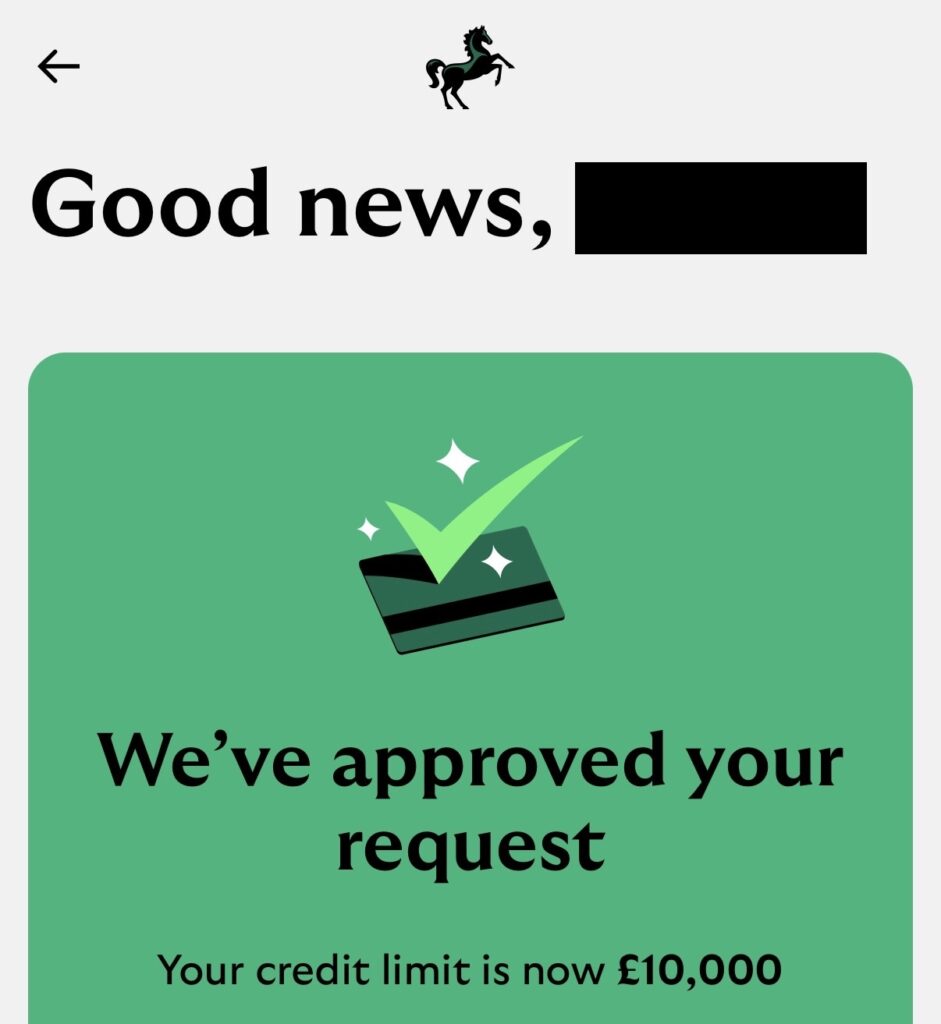
Luckily, I didn’t need all that. Lloyds allows a further increase within 60 days of the last one, so I waited till day 61 (as always) and was approved on the spot.
Final Thought
A credit limit increase is preferable, of course. There’s no new account, no extra search, and no need to shuffle limits around or close cards later on.
But it’s nice to know you have options. More providers now let you hold multiple cards and reallocate limits between them. Pretty much every major bank also offers an eligibility checker, giving you a much better idea of both your chances of being accepted. And finally (I waited years for that one), there’s an indication of the credit limit you might get.
Credit decisions will probably never make complete sense. But compared with a few years ago, the process feels so much more transparent, stress-free and fair.